
Table of Contents
- Why Hidden Termites Are Dangerous
- Signs of Termites in Walls You Can Spot
- Identifying Termite Mud Tubes in Your Garden
- How to Inspect a House for Termites: A Room-by-Room Approach
- Using Termite Detection Tools for Thorough Screening
- Common Mistakes to Avoid During Your Inspection
- When to Call a Professional Termite Inspector
- Frequently Asked Questions
Last Updated: October 11, 2026
Why Hidden Termites Are Dangerous
Termites cause more structural damage to Australian homes than fires, storms, and floods combined. These silent pests work inside walls, under floors, and within roof spaces for months or years before visible damage appears. By the time you notice a problem, thousands of dollars in repairs may already be necessary.
Hidden termites are particularly dangerous because they attack the timber that holds your house together. Joists, beams, and wall frames become hollow and weak. The structural integrity of your entire home is at risk. Early detection is the only way to prevent catastrophic damage.
Knowing how to detect hidden termites puts you in control. You can catch an infestation early and stop it before serious damage occurs.
Termites work silently inside timber for months before visible damage appears. Early detection prevents expensive structural repairs and protects your property’s value.
Signs of Termites in Walls You Can Spot
Interior wall indicators
Look for these warning signs inside your home. Tap along skirting boards and timber framing with a screwdriver. Damaged timber sounds hollow and soft. Solid timber sounds solid when tapped.
Check for blistering or bubbling paint on walls and skirting boards. This often indicates termites tunnelling just beneath the surface. The paint bubbles as termites create hollow spaces inside the timber.
Listen for clicking sounds inside walls, especially at night. Soldier termites make noise when defending the colony. You might also notice a musty, earthy smell, the scent of termite activity and decay.
Look for small holes or exit points in timber. These are where termites emerge. The holes are often surrounded by fine, powdery frass (termite droppings).
Exterior wall damage
Walk around the outside of your home and inspect all timber elements. Check weatherboards, corner posts, and timber cladding. Termites often attack external timber first because it’s closer to the soil.
Press your fingernail into timber surfaces. If it penetrates easily, termites may have damaged the wood. Healthy timber resists pressure. Damaged timber crumbles or dents.
Look for timber that appears darker, stained, or discoloured. Termites often leave staining as they tunnel through wood. The damage may look like long, thin tracks or galleries running along the grain.
Check the base of external timber posts. Termites often attack at ground level where moisture is highest. If posts sit directly on soil or concrete, inspect them closely.
Soft, hollow timber or paint blistering often means termites are actively tunnelling. The longer you wait, the more damage spreads. Professional inspection becomes urgent if you spot these signs.
Identifying Termite Mud Tubes in Your Garden
What mud tubes look like
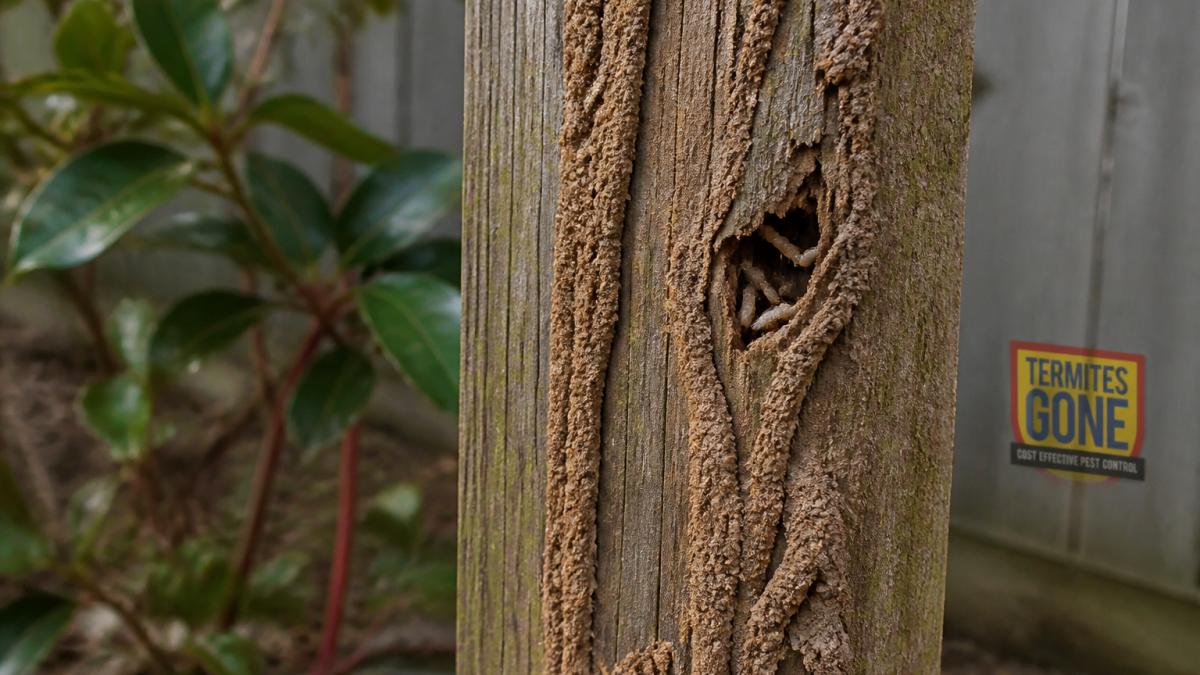
Termite mud tubes are brown, pencil-thin tunnels made of soil, saliva, and termite faeces. They look like dried mud running up timber or along concrete. The tubes are typically 5-10 millimetres wide and can extend several metres.
The tubes feel rough and brittle. If you break one open, you’ll see tiny termites inside (if the colony is active). The inside of the tube is smooth, while the outside is rough and bumpy.
Mud tubes protect termites from light and dry air. Termites cannot survive exposed to sunlight or dry conditions. They build these tubes as highways between their nest in the soil and food sources like timber in your home.
Where to find them
Check the foundation of your house where timber meets the ground. Mud tubes often run up the exterior of stumps or piers. They may also run along concrete footings.
Inspect garden structures: timber sheds, pergolas, fence posts, and retaining walls. Any timber in contact with soil is at risk. Termites build mud tubes to reach these structures from their underground nests.
Look along water pipes and electrical conduits running into your home. Termites use these as pathways. The tubes may run alongside pipes rather than directly on timber.
Check inside your roof space if you can access it safely. Mud tubes sometimes run up internal walls to reach roof timber. Use a torch to inspect dark corners and spaces where walls meet the roof.
Mud tubes often appear after rain when soil moisture is high. Check your property 24-48 hours after heavy rain, this is when termite activity is most visible.
How to Inspect a House for Termites: A Room-by-Room Approach
Basement and subfloor inspection
If your home has a basement or accessible subfloor, this is a critical inspection area. Termites attack subfloor timber because it’s moist, dark, and protected from weather.
Use a torch and inspect all visible timber. Look for mud tubes running along bearers, joists, and stumps. Check for soft or hollow-sounding timber. Press your screwdriver against timber, if it penetrates easily, termites may be present.
Inspect concrete footings and piers for mud tubes. Even if timber looks fine, termites may be tunnelling inside. The outside can appear normal while the interior is hollow.
Check for signs of moisture. Damp soil or pooled water creates ideal conditions for termite nests. Poor drainage or blocked gutters often lead to termite problems in subfloor areas.
Kitchen and bathroom checks
These rooms have the highest moisture levels in your home. Termites are attracted to moisture. Check around sink pipes, under vanities, and behind appliances.
Inspect timber framing around windows and doors. Water leaks create soft, damp timber that termites prefer. Look for paint bubbling, soft spots, or visible damage.
Check skirting boards throughout the kitchen and bathroom. Tap them with a screwdriver. Listen for hollow sounds. Look for mud tubes running along the base of skirting boards.
Roof and upper spaces
Access your roof space safely using a ladder. Wear protective equipment and watch for asbestos in older homes. Inspect all timber framing, especially around roof penetrations and gutters.
Look for mud tubes running up roof beams. Check around roof vents and skylights where water leaks occur. Termites often attack roof timber because leaks create moist, ideal conditions.
Inspect the underside of roof sheeting for signs of termite activity. Look for frass (fine, powdery droppings) on surfaces below damaged timber. This indicates active termites working above.
| Inspection Area | What to Check | Warning Signs |
|---|---|---|
| Subfloor | Bearers, joists, stumps | Mud tubes, soft timber, hollow sounds |
| Kitchen/bathroom | Pipes, vanities, skirting boards | Paint blistering, damp wood, soft spots |
| Roof space | Beams, roof sheeting, vents | Mud tubes, frass, damaged timber |
| Exterior | Foundation, posts, cladding | Discoloured timber, exit holes, mud tubes |
Using Termite Detection Tools for Thorough Screening
A moisture meter helps identify damp timber that attracts termites. Termites need moisture to survive. Damp areas are high-risk zones. Run the meter along walls, under sinks, and around windows.
A screwdriver or awl allows you to test timber hardness. Press the tool gently into timber surfaces. Soft timber that accepts the tool easily may indicate termite damage. Healthy timber resists penetration.
A torch with a bright beam reveals mud tubes and damage in dark spaces. Subfloor areas, roof spaces, and wall cavities are difficult to inspect without good lighting.
A moisture trap or termite detection device can be placed in high-risk areas. These simple traps monitor for termite activity over weeks. They’re inexpensive and help confirm whether termites are present.
For thorough screening, professional termite detection tools like acoustic sensors can detect termite movement inside timber. These tools identify activity that’s invisible to the human eye. They’re most useful when you suspect hidden termites but can’t find visible evidence.
Common Mistakes to Avoid During Your Inspection
Don’t assume your home is safe just because you don’t see obvious damage. Termites often work inside timber for months before exterior signs appear. Absence of visible damage doesn’t mean absence of termites.
Don’t skip the subfloor or roof space. These areas are out of sight, so many homeowners ignore them. Yet they’re often where termite damage is most severe.
Don’t rely on a single inspection method. Combine visual checks, tapping tests, and moisture measurements. Use multiple approaches to build confidence in your findings.
Don’t ignore small warning signs. A single mud tube or soft spot in timber is a red flag. Early action prevents costly damage. Waiting for “more obvious” signs often means waiting too long.
Don’t inspect only accessible areas. Termites hide in wall cavities, between floor joists, and inside roof spaces. These hidden zones require deliberate effort to inspect properly.
A single mud tube or soft timber is enough reason to call a professional. Waiting for obvious damage often means waiting until structural damage is severe and expensive to repair.
When to Call a Professional Termite Inspector
If you find any evidence of termites, mud tubes, soft timber, hollow sounds, or frass, contact a professional immediately. Early intervention stops damage before it becomes catastrophic.
If you’re buying a property, request a professional termite inspection before exchange of contracts. Hidden termite damage can cost tens of thousands to repair. A professional inspection protects your investment.
If your home is in a high-risk area or built on timber stumps, schedule annual professional inspections. These properties are more vulnerable to termite attack. Regular monitoring catches problems early.
If you’ve had termites before, ongoing professional monitoring is essential. Termites can return if preventative barriers aren’t maintained. Annual inspections ensure your protection remains effective.
Professional termite inspectors have tools, experience, and training that go beyond what homeowners can do. They inspect hidden spaces, identify risk factors, and recommend treatment options. They also provide detailed reports and recommendations for your insurance and bank.
Termites Gone Townsville provides comprehensive termite inspections with detailed reports and recommendations. Our team uses the latest technology to detect hidden termite activity. We identify damage, assess risk, and recommend preventative barriers to protect your property. With over 20 years of experience, we help property owners catch termite problems early and prevent expensive structural damage.
Detecting hidden termites early is the difference between a minor treatment and a major structural repair. The signs are there, you just need to know where to look and what to look for. Regular inspections of your subfloor, roof space, and exterior timber give you the best chance of catching termites before they cause serious damage. When you find evidence of termites, don’t wait. Australian Pest Management Association guidelines recommend professional treatment as soon as activity is confirmed. Contact Termites Gone Townsville for a professional inspection and detailed report. Our team will identify hidden termite activity, explain the risks, and recommend the best treatment options for your property.
Frequently Asked Questions
How can you tell if termites are hiding inside a wall?
Listen for hollow sounds when tapping timber, look for blistering or bubbling paint, and check for mud tubes running up the interior. Termites often leave soft or crumbly timber behind them. If walls feel unusually damp or smell musty, termites may be present. A moisture meter can help confirm dampness in suspicious areas, but a professional inspection is the most reliable way to detect hidden termite activity inside walls.
What are the early signs of termites in a home?
Early warning signs include mud tubes on foundations or garden structures, discarded termite wings near windows or doors, and small piles of fine sawdust (frass) around timber. Softened or crumbly timber, squeaky floorboards, and tight-fitting doors or windows may also indicate termite damage. Act quickly if you spot these signs, as termites can cause significant structural damage within months. Professional inspection helps confirm whether activity is recent or past.
Should you disturb or remove termite mud tubes?
Do not remove or disturb mud tubes if you suspect active termites. Breaking them alerts the colony and may cause termites to relocate, making them harder to treat. Instead, leave them intact and contact a pest controller immediately. A professional can inspect the tubes to determine if the colony is active, then apply targeted treatment. Disturbing them yourself could spread the infestation to other areas of your property.
Can a moisture meter or thermal camera detect hidden termites?
A moisture meter can identify damp timber where termites often hide, which is a useful indicator but not definitive proof. Thermal cameras may show temperature differences in infested areas, but these tools alone cannot confirm termite presence. They work best as screening aids alongside visual inspection. A professional termite inspector combines these tools with experience and detailed knowledge of termite behaviour to accurately detect hidden termites and assess structural risk.