
Table of Contents
- Why Annual Termite Inspections Matter for Your Property
- How Often Should You Get a Termite Inspection
- What Does a Termite Inspection Include
- Signs of Termites in a House You Shouldn’t Ignore
- Understanding Your Termite Inspection Report
- The Real Cost of Skipping Annual Inspections
- Early Detection Saves Money and Stress
- Frequently Asked Questions
Last Updated: October 7, 2026
Why Annual Termite Inspections Matter for Your Property
Annual termite inspections are one of the most overlooked yet critical investments a property owner can make. Termites work silently and relentlessly, often causing substantial damage before you notice a single sign. A comprehensive annual inspection catches infestations early, when treatment is simpler and far less expensive than dealing with structural damage that’s already taken hold.
At Termites Gone Townsville, we’ve seen firsthand how properties in Deeragun and the surrounding region face particular risk. Our climate and local building styles create ideal conditions for termite activity year-round. The difference between a property that’s inspected annually and one that isn’t often comes down to tens of thousands of dollars in repairs.
The real value of annual termite inspections isn’t just about finding termites, it’s about understanding your property’s vulnerability. A thorough inspection identifies areas where termites might enter, assesses moisture issues that attract them, and documents the condition of timber elements. This knowledge lets you make informed decisions about preventative treatments before an infestation takes hold.
Schedule your annual termite inspection before the warmer months when termite activity peaks. Early detection in spring prevents costly summer infestations.
How Often Should You Get a Termite Inspection
How often should you get a termite inspection depends on your property’s age, location, and construction type, but annual inspections are the industry standard for most Australian properties. If your home has a timber subfloor, is over 20 years old, or sits on bushland-adjacent land near Deeragun, annual inspections become even more critical.
Some properties warrant inspections more frequently. If you’ve had a previous termite problem, inspections every six months for the first two years after treatment provide extra reassurance. Rental properties and commercial premises often require annual inspections to meet compliance standards and satisfy insurance requirements.
New properties don’t need inspections immediately, but starting a schedule within the first five years establishes a baseline. Older homes benefit from annual inspections without exception, timber deteriorates, and termite entry points multiply over decades.
The cost of skipping a year’s inspection is almost never worth it. A missed annual inspection might save a few hundred dollars upfront, but discovering an active infestation a year late can mean the difference between a localised treatment and structural repairs costing tens of thousands.
What Does a Termite Inspection Include
A thorough termite inspection examines both visible and hidden areas of your property, using systematic methods to identify active infestations, past damage, and vulnerability points. A professional inspection takes 1-2 hours for a typical residential property, depending on size and accessibility.
Interior and Exterior Assessment
The inspection begins with a visual survey of the entire property’s interior and exterior. This includes checking all timber elements, wall framing, floor joists, door frames, and weatherboards, for signs of termite activity or damage. Inspectors look for mud tubes, which termites build to travel between soil and timber while staying protected from air exposure.
Damp areas receive particular attention because moisture attracts termites. Bathrooms, kitchens, laundries, and areas around downpipes are common problem zones. The inspector also assesses the property’s perimeter, checking for soil-to-timber contact, which gives termites direct access to the building structure without having to construct mud tubes.
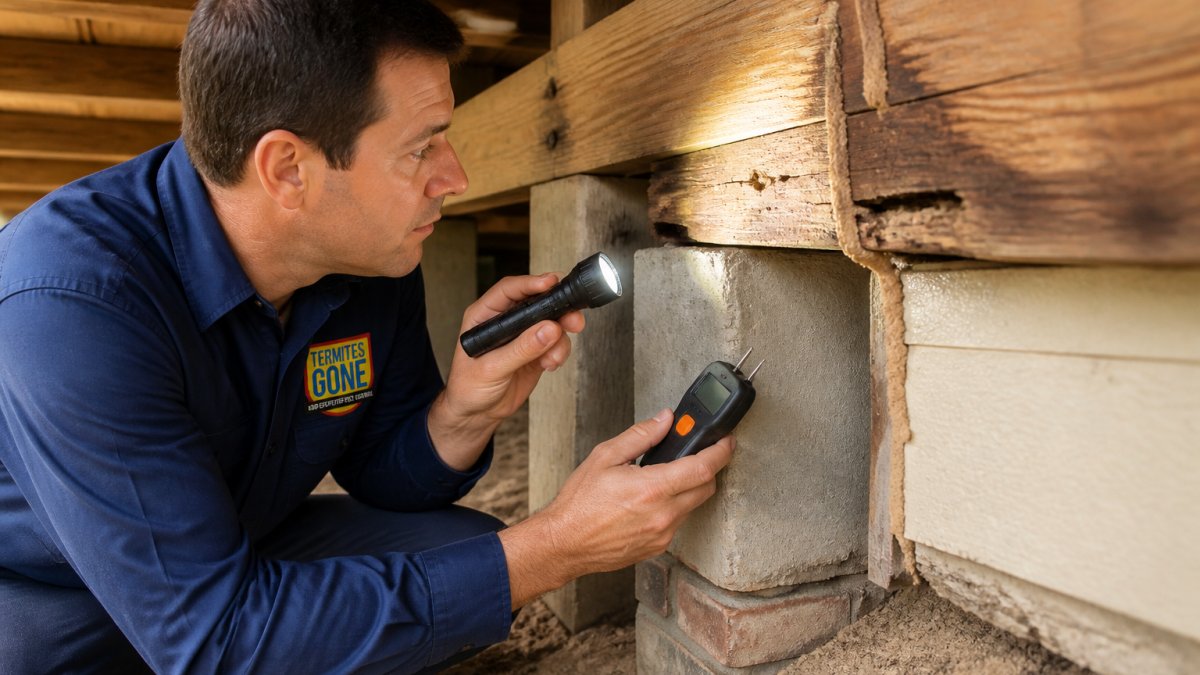
Ventilation and subfloor conditions are assessed thoroughly. Poor ventilation traps moisture and creates ideal termite habitat. In Deeragun properties with timber subfloors, inspectors check for standing water, inadequate airflow, and timber degradation that signals past or present termite activity.
Timber and Foundation Evaluation
Timber elements are tested for structural integrity using a variety of methods. Inspectors use moisture meters to detect elevated moisture levels that indicate active termite presence or water damage. A timber probe or small hammer may be used to test timber soundness, termite-damaged wood sounds hollow and crumbles easily.
The foundation and any concrete stumps are examined for cracks, gaps, and areas where soil meets the building structure. Termites exploit these entry points, so identifying and documenting them is crucial for developing a treatment strategy. The inspection report will note whether preventative barriers are present and, if so, their condition.
Any previous termite damage is documented. Old termite galleries, the hollow tunnels termites leave behind, indicate past activity. While not an active threat on their own, they signal that your property is known to termites and may warrant preventative treatment.
A complete inspection covers timber soundness, moisture levels, entry points, and evidence of past or active termite activity. This information becomes the foundation for any treatment or prevention plan.
Signs of Termites in a House You Shouldn’t Ignore
Recognising termite warning signs between annual inspections can save you months of damage. If you spot any of these indicators in your Deeragun property, contact a pest control professional immediately rather than waiting for your next scheduled inspection.
Mud tubes running up exterior walls or inside subfloors are the most obvious sign. These pencil-thin tunnels are termite highways, protecting them from exposure as they travel between soil and timber. Finding even a small mud tube means active termites are present in your property.
Hollow-sounding timber, visible galleries or tunnels inside wood, and timber that crumbles when probed are all indicators of termite damage. Soft spots in floorboards, skirting boards that feel spongy, or paint that blisters for no apparent reason often hide termite damage underneath.
Discarded termite wings near windows or doors suggest a swarm has recently occurred in or near your property. Swarmers, winged termites, emerge during warm months to establish new colonies. Finding wings indoors means termites are likely already established in your structure.
Excessive moisture, rising damp, or condensation in subfloors creates conditions termites seek. If you notice dampness increasing without an obvious water leak, termite activity may be accelerating moisture problems.
Ignoring these signs can allow a small, treatable infestation to become a major structural problem within 12-18 months. Termites consume timber from the inside out, leaving only a thin shell of sound wood on the surface.
Understanding Your Termite Inspection Report
A professional termite inspection report from Termites Gone Townsville provides a detailed record of your property’s condition and recommendations for treatment or prevention. Understanding this report helps you make informed decisions about protecting your investment.
The report documents all areas inspected, noting what was accessible and any areas where inspection was limited. It records the presence or absence of active termites, past termite damage, moisture issues, and structural vulnerabilities. Photographs and diagrams often accompany written findings, making it easy to understand exactly where problems were identified.
Recommendations are prioritised based on urgency. Active infestations require immediate treatment. Areas of high vulnerability, such as timber-to-soil contact or moisture accumulation, are flagged for preventative barriers or remedial work. The report may recommend follow-up inspections at specific intervals if risk factors are present.
A quality inspection report becomes part of your property’s maintenance record. If you’re selling your property or making insurance claims, this documentation proves you’ve taken reasonable steps to protect the structure. For rental properties, the report demonstrates compliance with tenant obligations and protects your investment.
The Real Cost of Skipping Annual Inspections
The financial impact of neglecting annual termite inspections compounds quickly. A small, early-stage infestation caught during a routine inspection might require a localised treatment, straightforward and relatively affordable. The same infestation discovered two years later, after spreading through floor joists and wall framing, can require extensive timber replacement and structural repairs costing significantly more.
Structural damage from termites isn’t always visible from the outside. By the time you notice sagging floors, cracked plaster, or damaged weatherboards, the internal damage is often extensive. Repairing structural elements, replacing floor joists, reframing walls, or rebuilding subfloor systems, demands specialist contractors and can take weeks to complete.
Insurance complications add another cost. Many home and landlord insurance policies require regular pest inspections as a condition of cover. Claiming for termite damage without evidence of annual inspections may result in reduced payouts or claim denial. For rental properties, skipping inspections can void end-of-lease compliance requirements, exposing you to bond disputes and tenant claims.
Property value suffers when termite history is disclosed. A property with documented termite damage, even if treated, attracts lower offers. Buyers factor in the cost of ongoing monitoring and potential future repairs. A property with a clean inspection history and preventative barriers in place commands higher market value.
The psychological cost matters too. Living with the uncertainty of undetected termite activity creates stress. Knowing your property has been professionally inspected and documented as pest-free provides genuine peace of mind.
Early Detection Saves Money and Stress
Termite prevention through regular inspection is far more cost-effective than dealing with infestations after they’ve caused damage. Early detection allows treatment to target active colonies before they spread, minimising timber loss and structural impact.
When Termites Gone Townsville identifies an infestation early, treatment options are simpler and faster. Localised barriers, targeted baiting systems, or spot treatments can eliminate the colony without extensive structural disruption. The property owner avoids the expense and inconvenience of major renovation work.
Annual inspections also allow preventative measures to be implemented strategically. If your Deeragun property shows vulnerability to termite entry, soil-to-timber contact, moisture accumulation, or poor ventilation, preventative barriers can be installed before infestation occurs. This proactive approach costs a fraction of post-infestation repairs.
Documentation of regular inspections protects your interests. For property sales, rental compliance, insurance claims, or future disputes, having a clear record of annual inspections and any treatments performed demonstrates responsible ownership and maintenance.
Homeowners in Deeragun with timber subfloors, older properties, or properties on bushland-adjacent land should prioritise annual inspections as part of their standard maintenance schedule.
Annual termite inspections are an essential investment in protecting your property’s structural integrity and your financial security. Properties in Deeragun face ongoing termite pressure due to local climate and building styles, making regular professional assessment non-negotiable. Termites Gone Townsville provides comprehensive annual inspections using the latest technology, detailed reports, and clear recommendations backed by over 20 years of industry experience. Our warranty on all general pest control work ensures you have ongoing support if treatment becomes necessary. Get started with a professional termite inspection and protect your property from costly structural damage, contact Termites Gone Townsville today for a detailed assessment.
Frequently Asked Questions
What are the main benefits of annual termite inspections?
Annual termite inspections detect infestations before they cause structural damage, protect your investment, and provide peace of mind. Early detection can save thousands in repair costs. Inspections also help satisfy lender requirements, support property sales, and ensure compliance with rental obligations. A professional inspection identifies termite activity, entry points, and conducive conditions that allow you to take preventative action before damage becomes severe.
How often should you get a termite inspection?
Most properties benefit from annual termite inspections. Older homes with timber elements, properties in high-risk areas, or those with a history of termite activity may need inspections every six months. New constructions should be inspected during and after construction. Rental properties typically require inspections before tenant turnover. Your pest control professional can recommend the ideal schedule based on your property’s age, construction type, and local termite pressure.
Can a termite inspection detect hidden termite damage?
Professional termite inspections can identify active termite colonies and early-stage damage that isn’t visible to the untrained eye. Inspectors use specialised tools and knowledge to locate termites in wall cavities, subfloors, and timber framing. However, extensive hidden damage may only become apparent once treatment begins. This is why regular annual inspections are crucial, they catch termites while damage is still minimal and treatment options are most effective.
Are annual termite inspections worth the cost?
Yes. The cost of an annual inspection is significantly lower than repairing structural damage caused by termites, which can run into tens of thousands of dollars. Inspections also prevent future infestations through early detection and recommendations for preventative barriers. For renters and landlords, inspections ensure compliance with end-of-lease requirements and protect bond claims. Property buyers use inspections to negotiate repair costs before purchase. The investment in prevention far outweighs the expense of dealing with a full-blown infestation.