
Last Updated: October 30, 2026
Quick Summary
A termite inspection checks the home from the ground up, starting with the subfloor, stumps and bearers, then moving through the roof void, wall cavities and ceilings. Inspectors look for mud tubes, hollow-sounding timber and soil touching wood, then give you a written report of what was found.
- Inspectors usually work from the outside in, starting at the foundations and moving up through the roof space.
- Subfloor checks cover stumps, bearers and joists, looking for mud tubes, hollow timber and soil touching wood.
- Mud tubes are usually about the width of a pencil and should be left in place until the inspection.
- Size of the property, subfloor access and building style all affect how long the inspection takes.
- Read your written report closely and ask the inspector to explain anything unclear before agreeing to work.
Table of Contents
- What a Termite Inspection Covers Before the Inspector Arrives
- Termite Inspection Checklist: The Areas an Inspector Works Through
- How to Identify Termite Mud Tubes in Your Garden
- How Long a Termite Inspection Takes and What Affects the Time
- Reading Your Termite Inspection Report
- Booking Your Termite Inspection in Deeragun
- Frequently Asked Questions
What a Termite Inspection Covers Before the Inspector Arrives
Many homeowners in Townsville assume a termite inspection is a quick walk around the outside of the house. A proper inspection is more thorough than that, working through the structure of the home from the ground up. Knowing what happens before the inspector arrives helps you get the most from the visit.
Termites feed on cellulose, which means timber, paper and other plant-based materials. Because they usually work from the ground and out of sight, the damage often sits behind walls and under floors long before you notice anything. That is why an inspector looks where you cannot.
Before the visit, it helps to:
- Clear access to the subfloor, roof space and under the house
- Move stored boxes, timber and garden materials away from the walls
- Note any cracks, sticking doors, or hollow-sounding timber you have seen
- Have a list of any previous treatments or repairs
Watch out: Do not assume a clean-looking outside wall means a clean house. Termites often build their galleries inside timber, where no surface sign shows.
Termite Inspection Checklist: The Areas an Inspector Works Through
A thorough inspection follows a set path so no area is missed. Inspectors typically work from the outside in, starting at the foundations and moving up through the roof space.
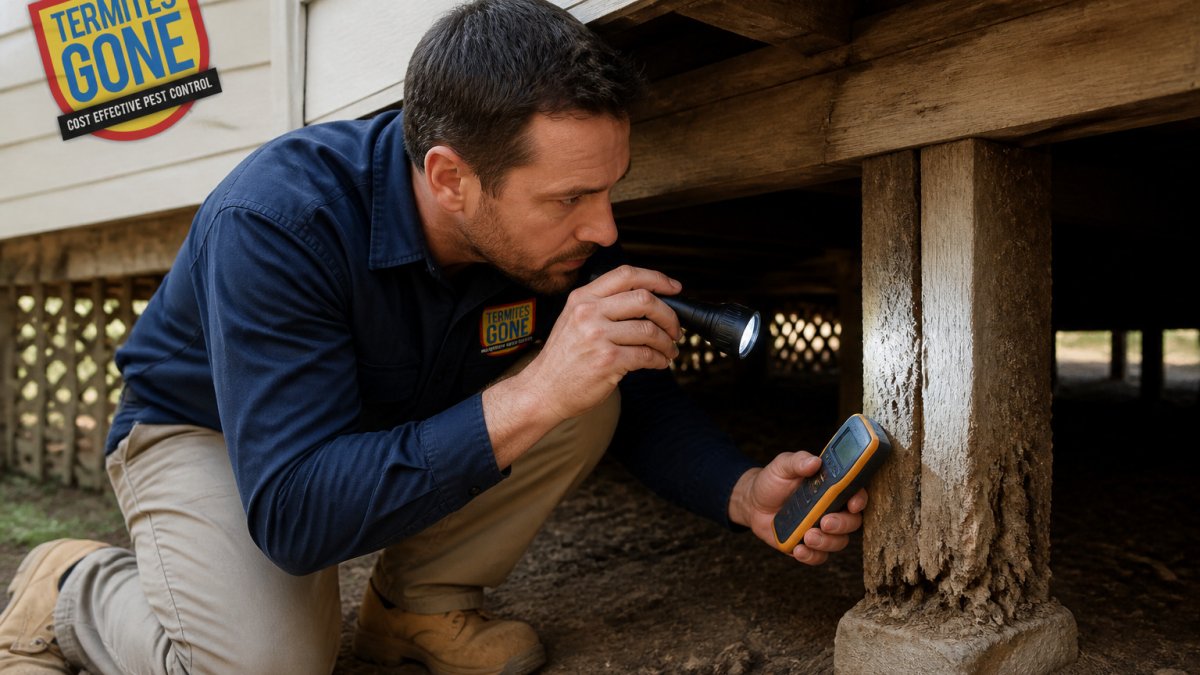
!A licensed pest inspector in work clothes with a torch and moisture meter, crouched beside the timber stumps under a Queensland timber house
Subfloor and Timber Stumps
The subfloor is where most termite activity starts in a Queensland home. Inspectors check the stumps, bearers and joists, looking for mud tubes, hollow timber and any soil that touches the wood.
Pay close attention to:
- Stumps and piers that touch the ground
- Bearers and joists with soft or crumbling edges
- Timber that sounds hollow when tapped
- Damp or stained areas that suggest moisture problems
Roof Voids, Wall Cavities and Ceilings
Termites can travel through hidden spaces to reach timber higher in the house. Inspectors use a torch to look through the roof void, check the top plates and rafters, and look for signs of activity around wall cavities and ceiling joins.
Common areas to check include:
- Roof timbers and battens
- Wall plates and the tops of internal walls
- Areas where pipes or wiring pass through timber
- Ceiling cornices and skirting boards near the floor
The inspection follows a set path, working from the foundations up through the roof space, so each area is checked in turn.
| Area | What the inspector checks | Common signs |
|---|---|---|
| Subfloor and timber stumps | Stumps, bearers and joists | Mud tubes, hollow timber, soil touching wood |
| Roof voids | Roof timbers and battens | Activity in the roof space |
| Wall cavities | Wall plates and tops of internal walls | Hidden damage behind walls |
| Ceilings | Cornices and joins | Activity near ceiling joins |
| Skirting boards | Timber near the floor | Hollow-sounding timber |
| Pipe and wiring points | Timber where services pass through | Activity around penetrations |
How to Identify Termite Mud Tubes in Your Garden
Termite mud tubes are one of the clearest signs of an active colony. They are narrow, earthen tunnels that termites build to move between their nest and food source while staying protected from air and predators.
Look for tubes on:
- Concrete slabs, footings and foundation walls
- Tree trunks and garden timber in contact with the ground
- Sheds, retaining walls and fence posts
Mud tubes are usually about the width of a pencil. If you break one open and find small, pale insects, that is a strong sign of active termites. Take photos and report them to your inspector.
Watch out: Mud tubes can be damaged or cleared quickly after a disturbance. Leave any you find in place until the inspection, so the inspector can see them as they were.
How Long a Termite Inspection Takes and What Affects the Time
The time a termite inspection takes depends on several factors:
- Size of the property: Larger homes and blocks with outbuildings take longer.
- Subfloor access: Tight or cluttered subfloors slow the work down.
- Building style: Older homes with timber stumps often need more detailed checks.
- Findings: If activity is found, the inspector may spend extra time mapping it.
Reading Your Termite Inspection Report
A good inspection ends with a written report. Read it carefully, because it tells you what was found, where, and what to do next.
Check that your report includes:
- A list of areas inspected and any areas that could not be reached
- Clear notes on any active termites, damage or conducive conditions
- Photos of key findings where relevant
- Written recommendations, such as treatment, repairs or follow-up checks
If something is unclear, ask the inspector to explain it before you agree to any work. A clear report should let you make a decision without guesswork.
Booking Your Termite Inspection in Deeragun
If you live in Deeragun and want a thorough check of your home, Termites Gone Townsville can arrange a termite inspection. With over two decades of experience in pest control, we provide detailed written reports for our termite inspections.
To book, call us on the number on our website and tell us about your property, including the age of the home and any signs you have noticed.
Find out more about what a termite inspection covers and what it costs, or read how to book a professional termite inspection in Townsville. For ongoing protection, see our termite control options for Deeragun or our general pest control services in Townsville.
Frequently Asked Questions
What does a termite inspector check inside a house?
A termite inspector works through the accessible parts of the home: interior walls and skirting boards, cupboards, ceilings, doorframes and window frames, and any visible timber. They look for live termites, frass (the fine droppings termites leave behind), mud tubes, blistered or hollow-sounding timber, and damp areas that attract termites. In a termite inspection, the inspector also notes conducive conditions such as leaking taps, stored timber against walls or poor drainage, because these are often what lets an infestation start. Findings are recorded in a written termite inspection report with recommendations.
Do termite inspectors check roof voids and subfloors?
Yes. A thorough termite inspection includes the subfloor, where timber stumps, bearers and joists are checked for mud tubes and damage, and the roof void, where the inspector checks rafters, battens and the underside of the roof sheeting. Where access is restricted, the report should say which areas could not be inspected, because those areas can hide activity. Ask your inspector to note any limitations so you know what remains unchecked.
How long does a termite inspection take?
The time a termite inspection takes depends on the size of the property, the amount of subfloor and roof space, and how cluttered the home is. Larger properties, homes with restricted access or properties with several outbuildings generally take longer. Clearing access points beforehand, such as under the house and in the roof hatch, makes the inspection easier to complete.
How should I prepare my home for a termite inspection?
Clear access to the subfloor, the roof hatch, cupboards under sinks and any garage or shed walls. Move stored timber, cardboard and garden sleeves away from the house, and let the inspector know about any past termite treatments or repairs. Make sure the inspector can reach the outside of the home and the garden beds next to it, because mud tubes often appear there first.
