
Quick Summary
Commercial pest control for food processing facilities requires specialist providers who understand hygiene standards, documentation, and timing needed to treat without contaminating product. Generalist technicians often lack the food safety knowledge needed to protect a site. Rodents, cockroaches, stored product insects, and flies are the pests most commonly found in food plants.
- Generalist pest technicians often lack the food safety knowledge food plants need.
- Rodents enter through gaps around doors, drains, and service pipes.
- Good integrated pest management fixes the conditions that let pests survive, not just sprays.
- Inspections should cover receiving bays, storage, drains, roof voids, waste areas, and perimeter.
- Ask providers for a written report after every visit.
Table of Contents
- Why Food Processing Facilities Need a Specialist Pest Provider
- Common Pests Found in Food Processing Facilities
- Integrated Pest Management for Food Facilities: What Good Looks Like
- Food Premises Pest Inspection Checklist: What a Provider Should Cover
- Pest Control Records for Food Businesses and Compliance Obligations
- Pest Prevention in Food Processing Plants: Reducing Risk Between Visits
- How to Choose a Commercial Pest Control Provider for Your Facility
- Booking a Commercial Pest Inspection for Your Food Premises
- Frequently Asked Questions
Why Food Processing Facilities Need a Specialist Pest Provider
Last Updated: November 2, 2026
Commercial pest control for food processing facilities is not the same job as treating a home or a retail shop. A specialist provider understands hygiene standards, documentation, and the timing needed to treat without contaminating product. This article walks through the pests to expect, what good integrated management looks like, and how to choose a provider you can trust.
Food processing sites face pressure from every direction, which is why commercial pest control for food processing facilities needs specialist attention. Pests bring disease, damage stock, and can trigger failed audits. Many operators find that generalist pest technicians do not know food safety rules well enough to protect their site. That gap is why specialist knowledge matters from the first visit.
Common Pests Found in Food Processing Facilities
Rodents, cockroaches, stored product insects, and flying insects are the pests most often found in food plants. Each one enters differently and needs a different response.
- Rodents: Enter through gaps around doors, drains, and service pipes
- Cockroaches: Hide in warm equipment, floor voids, and drains
- Stored product beetles and moths: Infest dry goods, flour, and packaging
- Flies: Breed in organic waste, drains, and damp areas
Spotting early signs helps. Droppings, gnaw marks, grease marks along walls, and insect shed skins all point to an active problem.
The table below summarises the main pests found in food plants, how they enter, and where they are typically found.
| Pest | Entry or source | Where to look |
|---|---|---|
| Rodents | Gaps around doors, drains, service pipes | Gnaw marks, droppings |
| Cockroaches | Warm equipment, floor voids, drains | Hidden warm and damp areas |
| Stored product beetles and moths | Dry goods, flour, packaging | Infested dry goods stores |
| Flies | Organic waste, drains, damp areas | Waste and drain areas |
Integrated Pest Management for Food Facilities: What Good Looks Like
Integrated pest management, often called IPM, combines inspection, prevention, monitoring, and targeted treatment. Good IPM does not rely on sprays alone. It fixes the conditions that let pests survive.
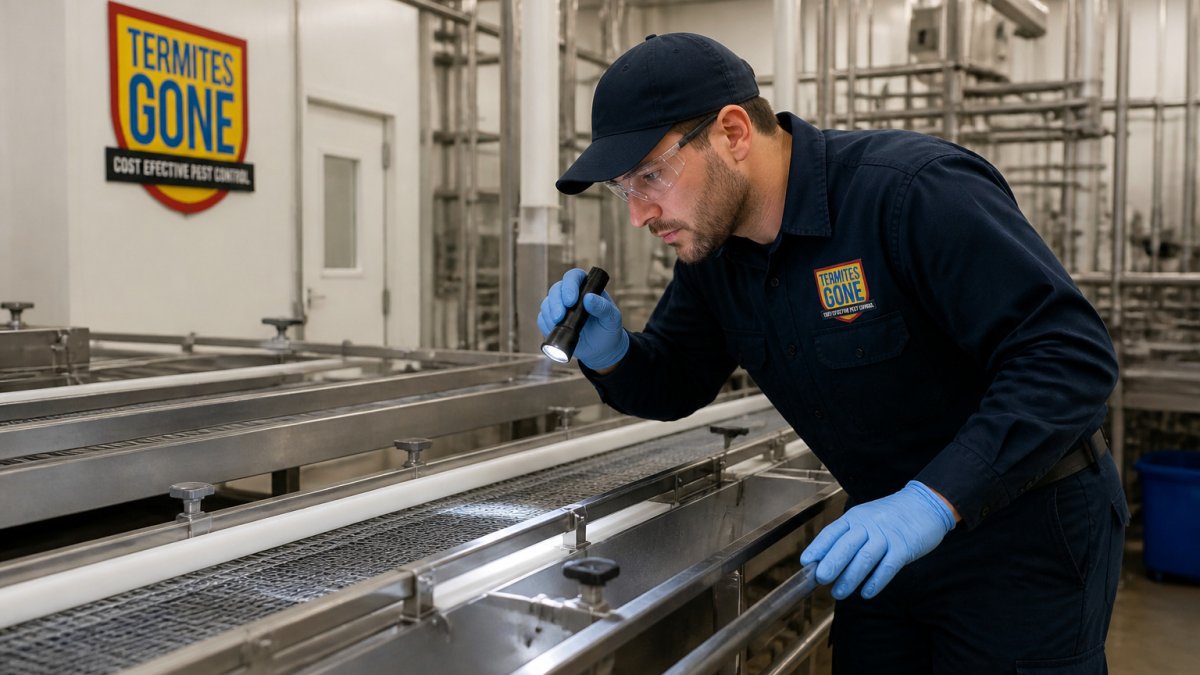
A strong commercial pest control for food processing facilities programme usually includes regular inspections with recorded findings and treatments chosen to suit food safety requirements.
Watch out: a provider who only sprays and leaves without a monitoring plan is not running IPM at all.
Food Premises Pest Inspection Checklist: What a Provider Should Cover
A thorough inspection should cover the whole site, not just the production floor. Ask whether the provider checks:
- Receiving bays and loading docks
- Storage areas and dry goods stores
- Drains, floor waste points, and grease traps
- Roof voids, ceiling spaces, and service ducts
- Waste areas and bin stores
- Staff amenities and external perimeter
Ask for a written report after each visit.
Pest Control Records for Food Businesses and Compliance Obligations
Food businesses in Australia are expected to keep records showing commercial pest control for food processing facilities is managed.
Local councils and state food regulators set the exact rules, so confirm current requirements with them directly. Our commercial pest management for retail stores page shows the inspection checklists and prevention plans we use.
Pest Prevention in Food Processing Plants: Reducing Risk Between Visits
Most pest problems grow between scheduled visits. Simple daily habits help a great deal:
- Keep bins sealed and emptied often
- Clean drains and floor areas at the end of each shift
- Report sightings or droppings straight away
- Store food off the floor and away from walls
These habits make your provider’s work more effective and easier to verify.
How to Choose a Commercial Pest Control Provider for Your Facility
When comparing providers, look beyond the price. Ask what they will do for your site, not just what they will spray.
Questions worth asking:
- Do they have experience with food premises?
- Will they provide written inspection reports after every visit?
- How do they handle urgent call-outs?
- Can they show how their programme fits your food safety plan?
For a general view of what to expect from termite and pest providers, our guide on how to choose a termite control company covers what to ask and how to verify warranties.
Booking a Commercial Pest Inspection for Your Food Premises
If you run a food premises and want a clear picture of your pest risk, the next step is a site inspection for commercial pest control for food processing facilities. Termites Gone Townsville can assess your facility and explain what we find. You can arrange a commercial pest inspection for your premises directly. Call us to arrange a visit and talk through your site’s needs.
Frequently Asked Questions
How does pest control work in a food processing facility?
Pest control in a food processing facility is usually planned as an ongoing programme rather than a one-off spray.
How often should a food processing facility be inspected for pests?
Inspection frequency depends on the size of the facility, the risk profile of the products and the level of pest activity found on previous visits. Many commercial food sites schedule regular routine inspections, with additional visits after any sighting or equipment change.
What records should a food business keep for pest control?
A food business should keep the service reports from its pest control provider, a site map showing monitoring device locations, records of any sightings and corrective actions, and the dates of treatments and the products used. Keep these records together and make them available to auditors or local council officers on request. Good records show that problems are noticed, recorded and acted on, which is often what an inspector wants to see.
