
Last Updated: October 23, 2026
Quick Summary
Alternatives to chemical termite barriers include baiting systems that eliminate colonies over weeks to months, monitoring stations that detect activity early, borate wood treatments that protect timber directly, and combined approaches using multiple methods. These options often cost less upfront than full chemical barriers, though they may require more frequent inspections or monitoring.
- Baiting systems require monitoring every 1-3 months but suit properties where digging around the perimeter is difficult
- Monitoring stations provide early detection at low cost but only watch for termites without active protection
- Borate treatments permanently protect timber but work best combined with barriers or baiting, not as standalone solutions
- Chemical barriers need only annual inspections but represent a significant upfront investment
- Combined approaches using monitoring stations plus borate treatment on high-risk timber cost less than full barriers while providing layered protection
Table of Contents
- Why homeowners seek alternatives to chemical termite barriers
- Termite baiting systems Australia: how they compare to barriers
- Termite monitoring stations: passive protection and early detection
- Wood treatments and borate applications as standalone options
- Chemical termite barrier cost Queensland: understanding the price difference
- Termite inspection frequency Queensland: knowing when to check your property
- Combining methods for better protection without breaking the budget
- Conclusion
- Frequently Asked Questions
Why homeowners seek alternatives to chemical termite barriers
Termite damage costs Australian property owners thousands in repairs each year. Chemical termite barriers have long been the standard defence, but homeowners in Deeragun and across Queensland increasingly ask whether alternatives exist, and whether they’re genuinely more affordable.
The truth is straightforward: chemical barriers work, but they’re not the only option. Cost, environmental concerns, property type, and personal preference all drive the search for alternatives to chemical termite barriers. Some properties suit different methods better than others. Understanding your options helps you choose protection that fits both your budget and your situation.
This guide breaks down the realistic alternatives, how they compare, and how to combine them without overspending.
Termite baiting systems Australia: how they compare to barriers
Baiting systems represent one of the most popular alternatives to chemical termite barriers. Instead of creating a chemical perimeter around your home, baiting systems use in-ground stations that detect and eliminate termite colonies over time.
How they work: Stations are installed in the soil around your property. Termites enter, consume bait laced with slow-acting toxins, and carry it back to the colony. The colony dies gradually, typically within weeks to months. This approach targets the source rather than blocking entry.
The key difference from barriers is timing. Chemical barriers stop termites on contact. Baiting systems work by elimination, which takes longer but can be highly effective for established infestations. Products like those used in Australian termite control vary in availability and suitability by property type and location.
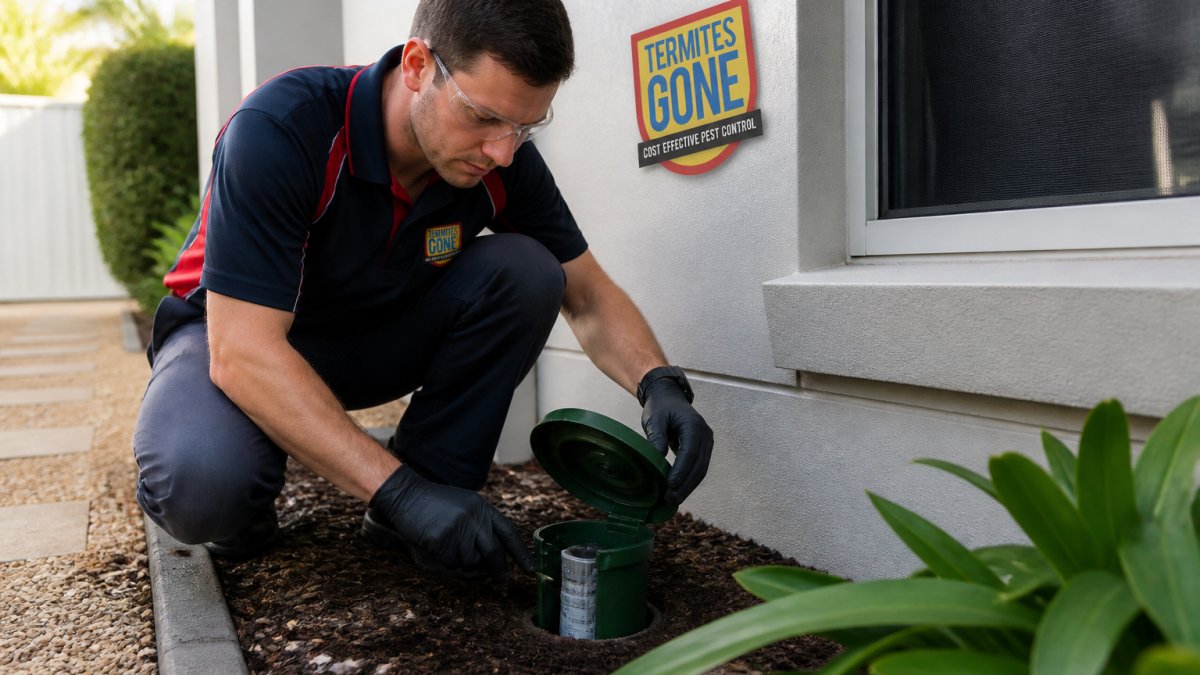
Baiting systems suit properties where digging around the perimeter is difficult, older homes with tight foundations, properties with established gardens, or rental properties where permanent installation isn’t ideal. They also work well alongside other methods rather than as a standalone solution.
The trade-off: baiting requires regular monitoring. Stations must be checked every few months to track termite activity and replenish bait. This ongoing attention means you’re not “set and forget” the way you might be with a chemical barrier. For Deeragun properties with active termite pressure, this monitoring becomes routine maintenance rather than a burden.
Cost-wise, baiting systems may have different upfront costs compared to full chemical barriers, though the ongoing monitoring and bait replacement add to the total. You can compare termite barriers and chemical sprays to understand how baiting fits into the broader landscape of options.
Termite monitoring stations: passive protection and early detection
Monitoring stations differ from baiting systems in one crucial way: they detect termite activity without killing the colony immediately. Think of them as early-warning systems rather than active treatments.
These stations are installed at regular intervals around your property. Technicians inspect them during scheduled visits, typically every 1-3 months, to check for termite presence. If termites are found, you can then decide on the next step: convert the monitoring station to a baiting station, apply a targeted treatment, or escalate to a full barrier if activity is widespread.
This approach works particularly well for properties with low to moderate termite risk or for owners who want to avoid chemical treatment altogether until it’s absolutely necessary. Deeragun properties in lower-risk zones might use monitoring alone, while those in high-risk areas typically combine it with other methods.
The advantage is cost-effective early detection. You’re not paying for active treatment you might not need. The disadvantage is clear: you’re only watching, not protecting. If termites are found, you’ll need to act quickly, which means having a treatment plan ready.
Wood treatments and borate applications as standalone options
Wood treatments like borate applications offer a different angle: protecting timber directly rather than creating a soil barrier or using bait systems.
Borate products penetrate timber and make it inhospitable to termites. They’re typically applied to exposed timber in subfloors, roof spaces, and other vulnerable areas. The treatment is permanent once applied, it doesn’t wash away or degrade over time the way some chemical barriers do.
Borate treatments suit older properties with timber subfloors, particularly in Deeragun where many homes have this construction style. They’re also useful for spot treatment, protecting specific high-risk timber without treating the entire property perimeter.
The limitation is scope. Borate treatments protect the timber they’re applied to, but they don’t prevent termites from entering your home through untreated areas. They work best combined with either a barrier or baiting system, not as a complete standalone solution. A property with a timber subfloor, for instance, might use borate on the subfloor timber plus monitoring stations around the perimeter.
Cost may be lower than full chemical barriers, especially if you’re only treating specific areas rather than the entire property envelope.
Chemical termite barrier cost Queensland: understanding the price difference
Chemical barriers remain the most comprehensive option, and understanding their cost helps explain why alternatives appeal to budget-conscious homeowners.
A full chemical termite barrier involves applying liquid termiticide to the soil around your property’s perimeter and often under the building itself. The application creates a continuous chemical zone that termites cannot cross. This may represent a significant upfront investment but provides comprehensive protection.
The cost varies significantly based on property size, soil type, accessibility, and the specific chemical used. Property size and accessibility can influence the overall cost.
What’s important to understand: you’re not just paying for the chemical. You’re paying for professional application, site assessment, detailed reports, and often a warranty. A proper installation takes time and expertise. Cutting corners on application quality defeats the purpose entirely.
This is where alternatives gain appeal. If your property doesn’t fit the “high-risk” profile, if termite activity is low, if you’re willing to monitor actively, or if you’re in a rental situation, spending on a full barrier might be overkill. Baiting or monitoring might deliver adequate protection at a fraction of the cost.
You can understand termite inspection costs and what’s included to see how professional assessment factors into the overall price picture.
Termite inspection frequency Queensland: knowing when to check your property
How often you need inspections depends on which protection method you choose, and this affects your total cost significantly.
Properties with chemical barriers typically need annual inspections to ensure the barrier remains intact and to check for any breaches. This is relatively infrequent and manageable.
Properties using baiting systems need inspections every 1-3 months while bait stations are active, then annually once the colony is eliminated. This is more frequent but necessary for the method to work.
Properties using monitoring stations alone need quarterly or semi-annual inspections, depending on your risk level and the recommendation from your pest control professional.
Older properties in Deeragun with timber subfloors or those in known termite hotspots should inspect more frequently regardless of method. A property that’s had a previous infestation warrants closer monitoring for at least 12 months after treatment.
The practical takeaway: the “cheapest” method upfront might cost more in total if it requires frequent inspections. A barrier with annual inspections might deliver different value compared to baiting with quarterly visits, depending on your property’s risk profile.
Combining methods for better protection without breaking the budget
The most effective strategy for many Deeragun homeowners isn’t choosing one method, it’s combining them strategically.
A practical example: use monitoring stations around the property perimeter (low cost, detects activity early) plus borate treatment on exposed timber in high-risk areas (protects vulnerable timber, permanent). This combination costs less than a full chemical barrier but provides layered protection. If monitoring detects termites, you can escalate to baiting or a barrier at that point.
Another approach: apply a partial chemical barrier to the most vulnerable areas, entry points, timber subfloors, known termite highways, rather than treating the entire perimeter. You can compare the best termite barriers for homes to explore different barrier types and cost factors for creating affordable combinations. This reduces cost while protecting your property’s highest-risk zones.
The key is matching your method to your actual risk level. A property with no previous termite activity, good drainage, and low local termite pressure needs less aggressive protection than one with a history of infestation or in a high-risk zone.
Queensland Government guidance on termite management provides recommendations for property owners, though professional assessment always trumps general guidance. Your local pest control professional can assess your specific property and recommend the most cost-effective combination.
You can choose a termite control company with confidence to help evaluate and implement your chosen strategy. You can also contact Termites Gone Townsville to discuss which combination of methods suits your property and budget.
| Method | Best For | Frequency | Cost Level |
|---|---|---|---|
| Chemical barrier | Comprehensive protection | Annual inspection | High upfront |
| Baiting system | Active infestations, ongoing elimination | Monthly-quarterly monitoring | Medium |
| Monitoring stations | Early detection, low-risk properties | Quarterly-annual | Low |
| Borate treatment | Timber protection, spot treatment | One-time application | Low to medium |
| Combined approach | Most properties, balanced protection | Varies by mix | Medium |
Conclusion
Affordable alternatives to chemical termite barriers exist and work, but they require understanding what each method does and doesn’t protect against. Baiting systems, monitoring stations, and wood treatments each have legitimate uses. The most cost-effective strategy for your Deeragun property depends on its age, construction type, location, and termite history.
Rather than choosing the cheapest option in isolation, consider combining methods to create layered protection within your budget. A professional assessment identifies which combination makes sense for your specific property. Termites Gone Townsville offers detailed inspections and recommendations tailored to your situation. Get in touch to discuss which approach works best for your property.
Frequently Asked Questions
What are the main alternatives to chemical termite barriers in Australia?
The primary alternatives to chemical termite barriers include in-ground baiting systems, termite monitoring stations, wood treatments using borate products, and regular professional inspections. Baiting systems work by allowing termites to consume poison and carry it back to the colony, while monitoring stations detect activity early without continuous chemical coverage. Each method has different costs and effectiveness depending on your property type and termite risk level. A professional pest control operator can assess your specific situation and recommend the most suitable approach for your needs.
Are termite baiting systems cheaper than chemical barriers?
Termite baiting systems Australia may offer different cost structures than chemical barriers, but pricing depends on installation, station placement, and ongoing servicing requirements. Initial costs and long-term maintenance expenses vary between methods. Rather than assuming one is cheaper, obtain quotes from qualified local operators who can compare the total cost of ownership for your property. Some properties benefit from baiting systems, while others may find barriers more economical based on size, soil type, and termite pressure in your area.
How often should termite bait stations be inspected?
Termite monitoring stations typically require inspection every 3 to 6 months to check for termite activity and ensure the bait is fresh and effective. Regular inspection frequency Queensland recommendations depend on local termite risk levels and the specific system installed. More frequent checks may be needed in high-risk areas or during warmer months when termite activity increases. Your pest control professional will advise the appropriate schedule for your property and should provide a maintenance plan that fits your budget and protection goals.
Do I need a chemical barrier if I use baiting systems or monitoring stations?
Not necessarily. Some properties use baiting systems or monitoring stations as standalone protection, while others combine methods for added security. The decision depends on your property’s termite risk, age, construction type, and budget. A comprehensive termite inspection will reveal whether your home needs multiple protective layers or if one method provides adequate coverage. Professional advice from an experienced operator ensures you’re protected without paying for unnecessary treatments.
