
Last Updated: October 23, 2026
Quick Summary
Pest infestation reporting is the formal process a tenant follows to tell a landlord or property manager about pests in writing, with evidence. You identify the pest, photograph the pest and damage, log each sighting, then send a dated written notice requesting inspection or treatment and keep a copy.
- If you suspect termites, report it the same day because they damage the building itself.
- Photograph the pest, damage and location before cleaning anything up.
- Your written notice should include your address, the pest, when you noticed it and a request for inspection.
- Queensland law sets no fixed number of days for landlord response, but a reasonable timeframe applies.
- If ignored, send a follow-up email referencing your first report and its date, then contact the RTA.
Table of Contents
- Tenant Pest Infestation Reporting Steps: The Process From Start to Finish
- Step 1: Identify What You’re Dealing With
- Step 2: Document Everything Before You Call Anyone
- Step 3: Notify Your Property Manager or Landlord in Writing
- Your Tenant Pest Complaint Evidence Checklist
- Pest Infestation Email Template for Tenants
- Landlord Response Time for Pest Infestation: What Queensland Law Says
- What to Do If Your Landlord Ignores Your Pest Complaint
- When to Call a Professional Pest Controller
- Conclusion
- Frequently Asked Questions
Tenant Pest Infestation Reporting Steps: The Process From Start to Finish
Pest infestation reporting is the formal process a tenant follows to tell a landlord or property manager about pests in a rental property, in writing, with evidence. At Termites Gone Townsville, we have handled pest problems across Deeragun, QLD for more than 20 years, and we can tell you the paperwork matters as much as the treatment. This guide walks you through the tenant pest infestation reporting steps from start to finish, so your complaint is on record and gets action. Below, we show you exactly what to document, what to write, and what to do when nobody replies.
Step 1: Identify What You’re Dealing With
Before you send anything, work out roughly what pest you have. This shapes how urgent your report is and who pays.
- Termites: mud tubes, hollow-sounding timber, bubbling paint
- Cockroaches: droppings, egg cases, greasy marks near cupboards
- Ants: trails along skirting boards or benches
- Bed bugs: bites in lines, blood spots on sheets
- Rodents: droppings, gnaw marks, scratching at night
- Spiders: webs and egg sacs in corners or under eaves
Termites are the one to flag fastest. They damage the building itself, not just your belongings. If you suspect termites, report it the same day.
Step 2: Document Everything Before You Call Anyone
Good evidence is what separates a complaint that gets fixed from one that gets ignored. Photograph the pest itself, the damage, and the location. Note dates and times you first saw it.
Keep a simple log:
- Date and time of each sighting
- Where in the property it happened
- What you saw or heard
- Photos or short videos
A common mistake is to clean up before taking photos. Don’t. Capture the droppings, the trail, the damage first.
Step 3: Notify Your Property Manager or Landlord in Writing
Put it in writing, every time. A phone call is easy to forget; an email leaves a paper trail. Send your report to your property manager or landlord and keep a copy.
Your written notice should include:
- Your address and the date
- The pest you believe you have
- When you first noticed it
- What you’ve done so far
- A request for inspection or treatment
This is the core of pest infestation reporting: a clear, dated, written record. Once it’s sent, the clock starts on your landlord’s response.
Your Tenant Pest Complaint Evidence Checklist
Use this checklist before you send your report. It covers what a landlord or tribunal will want to see.
- Photos of the pest, taken in daylight
- Photos of damage or droppings with something for scale
- A dated log of sightings
- A note of any pest control you’ve already tried
- Copies of any previous messages to the landlord
- Your written notice, saved as a PDF or screenshot
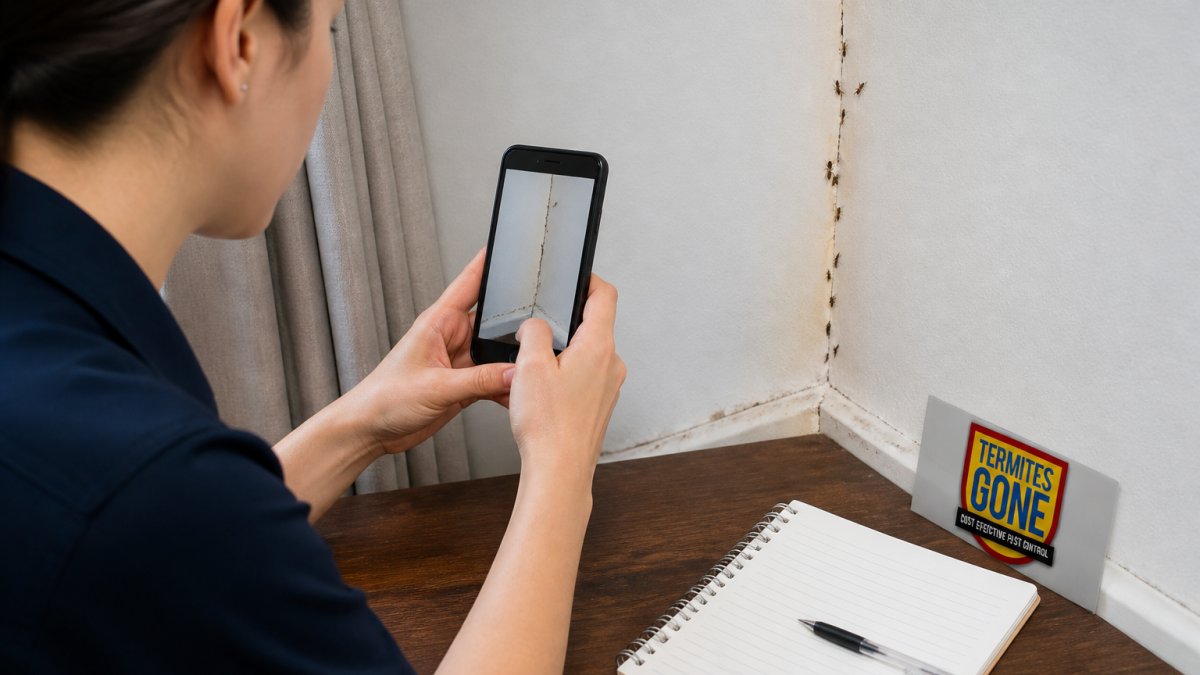
Keep the originals. A tenant pest complaint evidence checklist is only useful if the evidence is dated and stored somewhere you can find it later.
Pest Infestation Email Template for Tenants
Here is a ready-to-send template. Fill in the bracketed parts.
Subject: Pest issue at [address] – request for inspection
Hi [property manager name],
I’m writing to report a pest issue at [address]. I first noticed [pest] on [date]. I’ve attached photos and a log of sightings.
I believe this needs an inspection and treatment. I have not caused the issue; it appears to come from [location, e.g. roof cavity / subfloor].
Please let me know when an inspection can be arranged. I’d appreciate a written response within [number] days.
Thanks,
[your name]
[your phone number]
A pest infestation email template for tenants saves time and keeps your message clear. Send it, then save a copy.
Landlord Response Time for Pest Infestation: What Queensland Law Says
In Queensland, a landlord must keep the property in a reasonable state of repair and fit to live in. That includes dealing with a pest problem that makes the home unsafe or unlivable. The landlord response time for pest infestation isn’t a fixed number of days in the Act, but a reasonable timeframe applies. For urgent issues like termites, “reasonable” means fast.
Under Queensland tenancy rules, tenants should report the issue promptly and landlords should act without undue delay. If you’re unsure of your exact rights, check the Residential Tenancies Authority guidance for tenants. The RTA is the state regulator and its fact sheets are the clearest source.
What to Do If Your Landlord Ignores Your Pest Complaint
If your written report gets no reply, escalate in steps. Don’t stop paying rent; that creates a separate problem.
- Send a follow-up email referencing your first report and its date.
- Request a response in writing within a set period.
- Contact the Residential Tenancies Authority for advice on your options.
- Keep every message and photo as evidence.
Knowing what to do if your landlord ignores your pest complaint protects your bond and your health. Escalating in writing, in order, is the strongest position you can hold.
When to Call a Professional Pest Controller
Call a professional when the pest is termites, when DIY baits have failed, or when the problem affects the structure. A licensed controller can inspect, identify the species, and treat it properly.
At Termites Gone Townsville, we provide comprehensive termite inspections with detailed reports and recommendations, plus a warranty on all general pest control work. We serve homes and businesses around Deeragun and the wider Townsville area. If you’re searching for a pest controller near me, our team can inspect and document the problem so you have a proper report for your landlord.
Ask for the written inspection report, not just a verbal summary. It’s the document your property manager and, if needed, the tribunal will accept as proof the problem was real.
Conclusion
Getting pests fixed in a rental comes down to clear, dated, written evidence. Follow the tenant pest infestation reporting steps above, keep your records tidy, and escalate in writing if nothing happens. If you need an inspection or treatment, Termites Gone Townsville can help with detailed reports, over 20 years of experience, and a warranty on general pest control work. Call us to book an inspection and get your pest problem on record.
Frequently Asked Questions
How should a tenant report a pest infestation in Queensland?
Report it in writing to your property manager or landlord as soon as you notice the problem. Include photos, dates, and a clear description of the pests and where you found them. Keep a copy of every message. Under Queensland tenancy rules, written notice creates a record that protects you if the issue escalates. Follow up with a phone call if you haven’t received a reply within a few days, and log that call too.
What evidence should I collect before reporting a pest infestation?
Take dated photos and short videos of the pests, droppings, damage, and nesting areas. Note the rooms affected and how long you’ve noticed activity. Keep any receipts if you’ve bought traps or treatments. Save all messages with your landlord or agent. A clear evidence file makes your pest infestation reporting stronger and helps the pest controller identify the problem quickly when they attend.
How quickly should a landlord respond to a pest report?
Queensland law requires landlords to keep the property in good repair and fit to live in. While there is no fixed number of days for pest issues, urgent problems like a rodent or cockroach infestation should be addressed promptly, usually within days. If your landlord delays, send a follow-up in writing. For serious health risks, you can contact the Residential Tenancies Authority for advice on next steps.
Can I arrange pest control myself if my landlord ignores my complaint?
You can arrange treatment, but get written approval first or you may not be reimbursed. If the landlord ignores your pest complaint, send a formal breach notice giving a reasonable timeframe to act. If they still don’t respond, contact the Residential Tenancies Authority. In urgent health situations, you may be able to arrange treatment and seek reimbursement through the proper channels, but keep every receipt and message.
