
Last Updated: October 23, 2026
Quick Summary
Signs of active termite infestation include visible wood damage that sounds hollow when tapped, fresh frass (termite droppings) resembling fine sawdust near damaged timber, and mud tubes running from soil to timber that feel moist inside and contain live termites. Finding discarded wings indoors or hearing faint clicking sounds in timber also indicate an active colony nearby.
- Mud tubes that feel damp inside and contain live termites when broken are the clearest sign of active termite activity.
- Fresh frass piles growing over weeks below damaged timber indicate termites are actively feeding in your home right now.
- Discarded termite wings on windowsills indoors prove swarmers emerged from inside your property, confirming an active colony.
- Timber that crumbles when pressed or sounds hollow when tapped shows active feeding damage, not old damage.
- Contact a professional immediately if you find signs; DIY treatments rarely work and can alert termites to move deeper into timber.
Table of Contents
- What You’ll Need Before You Start
- Visual Signs of Active Termite Infestation
- Active Termite Mud Tubes: How to Spot and Assess Them
- Signs of Termites in Walls and Hidden Locations
- Termite Swarmers in Australia: Recognising the Winged Signs
- Auditory and Environmental Clues
- What to Do After Finding Termites
- Common Mistakes to Avoid
- Frequently Asked Questions
What You’ll Need Before You Start
Before you begin searching for signs of active termite infestation, gather a few basic tools. You’ll need a torch, a small screwdriver or flathead tool, and a magnifying glass if you have one.
The best time to inspect is during daylight. Natural light reveals damage that’s easy to miss indoors.
Start in areas where termites thrive: damp spaces, timber-to-soil contact points, and foundations. Checking subfloors, garden beds, fence posts, and timber decking first is a good approach.
Check after rain or in winter when soil moisture is highest. Termites need moisture to survive, so they’re more active in damp conditions.
Visual Signs of Active Termite Infestation
The most obvious signs of active termite infestation appear as visible damage to timber. Wood that looks hollowed out, papery, or weakened is a red flag. Tap suspect timber with your screwdriver, active termite damage sounds hollow and feels soft.
Wood damage and hollowing
When termites feed inside timber, they create galleries and tunnels. The wood loses its strength from the inside out. You might see the surface looks normal, but underneath is completely eaten away.
Look for:
- Timber that crumbles when you press it
- Wood that sounds hollow when tapped
- Sagging or warped timber in floors, walls, or roof spaces
- Cracks in timber running along the grain
The damage pattern matters. Subterranean termites (the most common type in Queensland) eat timber along the grain.
If you find soft timber, take a photo and mark the spot. This is evidence of active feeding, not just old damage.
Frass and termite droppings
Frass is the technical term for termite droppings. It looks like fine sawdust or sand, usually tan or brown in colour. Fresh frass near damaged timber indicates active termites working right now.
Where to look for frass:
- Below damaged timber on the ground or floor
- Inside mud tubes (more on those next)
- Around the edges of timber where termites are entering or exiting
- On windowsills or shelves near infested timber
Frass piles up when termites are actively feeding. A growing pile over weeks suggests an active colony nearby. Some termite species push frass out of their tunnels to keep galleries clean. Others seal it inside, so you might not see it at all.
Do not disturb frass piles or active mud tubes. Handling them can alert termites and cause them to abandon the visible signs, making follow-up treatment harder.
Active Termite Mud Tubes: How to Spot and Assess Them
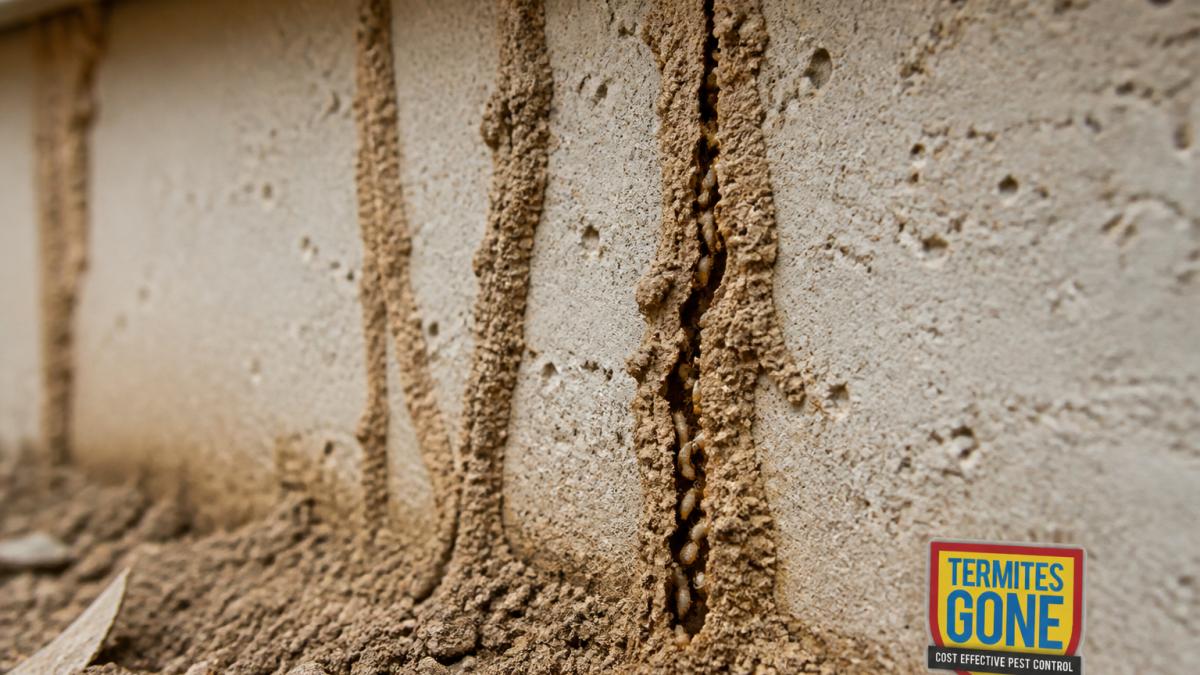
Mud tubes are one of the clearest signs of active termite infestation. Subterranean termites build these tubes from soil, saliva, and timber particles. The tubes protect termites from dry air and predators as they travel between their nest and food sources.
Where mud tubes appear
Mud tubes typically run from the soil up to timber. They follow walls, posts, and foundation edges. Look for them on:
- Concrete or brick piers under houses
- Exterior walls near the ground
- Inside subfloor spaces along bearer timber
- Around fence posts and garden structures
- Inside roof cavities (less common, but possible)
Tubes are usually pencil-thick to thumb-thick, depending on the termite species and how old the tube is. New tubes are pale tan. Older tubes darken over time. Active tubes feel slightly moist and crumbly. Dead tubes are dry and brittle.
Testing whether mud tubes are active
This is the key test for determining if termites are actively using the tube right now.
The break test:
Gently break off a section of the mud tube. Look inside for live termites.
The repair test:
Mark a broken section with a pen or tape. Come back in 3-7 days. If termites have repaired the tube, it’s active.
The moisture test:
Touch the inside of a broken tube section. Active tubes feel damp or sticky. Dead tubes are completely dry and crumbly.
Active mud tubes mean a termite colony is close by and actively foraging. This is a sign you need professional help soon, not eventually.
Signs of Termites in Walls and Hidden Locations
Termites hide inside walls, making them hard to spot until damage is severe.
Look for these warning signs that termites are in walls:
- Blistering or bubbling paint on walls or skirting boards
- Soft spots in timber trim or architrave when you press it
- Visible mud tubes running up inside walls (check around electrical outlets and light switches)
- A hollow sound when you tap on timber frames
- Slight warping or buckling of walls
Timber subfloors are common. Termites often attack bearer timber and floor joists from underneath. Walk slowly across your floors and listen for creaking or soft spots.
Check inside wall cavities if you can access them safely. Peer through gaps in old brick or weatherboard. Look for mud tubes, frass, or damaged timber.
Bathrooms and kitchens are high-risk areas. Moisture from plumbing leaks attracts termites. Check timber frames around windows and doors, especially in wet areas.
Termite Swarmers in Australia: Recognising the Winged Signs
Termite swarmers are the winged reproductive forms of the colony. They appear once a year, usually in spring or early summer (September to December in Queensland).
Swarmers look different from worker termites:
- Wings: Two pairs of equal-sized wings that are longer than the body
- Colour: Dark brown or black (not white like workers)
- Size: Slightly larger than workers, about 12-15 millimetres long
- Behaviour: They fly in a clumsy, fluttering pattern toward light sources
When swarmers emerge, they swarm in large numbers. You might see them near windows, doors, or lights. Many die quickly after swarming, they leave behind discarded wings on windowsills and floors.
Finding discarded wings indoors is a critical sign. Termite wings drop off after the swarmers pair up.
If you see swarmers indoors or find discarded wings, contact a professional immediately. This means termites are actively reproducing in your property.
Auditory and Environmental Clues
Termites make noise. Soldier termites bang their heads against timber to warn the colony of danger. Worker termites chew timber.
Press your ear against suspected timber. Listen for:
- Faint clicking or tapping sounds
- Rustling noises inside the wood
- Crackling sounds (like a tiny fire)
These sounds are subtle and easy to miss. They’re most noticeable in silent rooms at night. The noise comes from thousands of termites working together.
Environmental conditions also signal termite risk:
- High moisture: Damp soil, poor drainage, or water pooling near foundations
- Timber-to-soil contact: Posts, stumps, or timber frames touching the ground
- Untreated timber: Weatherboard, fence posts, or old decking without protective barriers
- Leaf litter: Piles of dead leaves or mulch against timber structures
- Blocked gutters: Water overflow that soaks timber or soil
The subtropical climate means high humidity and regular rainfall. Soil stays moist much of the year. This creates ideal conditions for subterranean termites. Properties with poor drainage or timber-to-soil contact are at higher risk.
What to Do After Finding Termites
If you’ve found signs of active termite infestation, act quickly. Termites cause structural damage fast. What looks like minor damage now can become severe in months.
Immediate steps:
-
Do not treat it yourself. DIY pest control rarely works for termites. You might kill surface termites but miss the colony, allowing them to return.
-
Do not disturb the infestation. Avoid breaking mud tubes, spraying timber, or moving debris. This alerts termites and makes professional treatment harder.
-
Take photos and notes. Record the location, type of damage, and any mud tubes or frass. This helps the professional understand the extent of the problem.
-
Call a professional pest control service. Termites Gone Townsville provides comprehensive termite inspections with detailed reports. Our team uses the latest technology to find hidden termite activity and recommend the right treatment.
-
Get a written report. A professional inspection includes a detailed report showing where termites are active, what damage they’ve caused, and what treatment options are available.
Professional treatment typically involves:
- A full property inspection to find all active sites
- Targeted barrier treatments to stop termites from entering
- Spot treatments to eliminate active colonies
- Preventative measures to protect timber
The cost depends on the size of your property, the extent of the infestation, and the treatment method. Prices vary, so ask for a detailed quote that explains what’s included.
Many properties benefit from annual termite inspections, especially if you have timber subfloors or untreated timber structures. Early detection saves money and prevents structural damage.
Common Mistakes to Avoid
Homeowners often make mistakes that delay treatment or make the problem worse.
Mistake 1: Ignoring early signs
A single mud tube or small patch of frass seems minor.
Mistake 2: Using surface-level treatments
Spraying timber with insecticide kills visible termites but misses the colony.
Mistake 3: Disturbing mud tubes before professional inspection
Breaking tubes alerts the colony.
Mistake 5: Delaying treatment
Every month you wait, termites do more damage. Structural timber weakens.
Mistake 6: Not treating the whole property
Termites often have multiple entry points.
Ready to protect your property from termites? At Termites Gone Townsville, we’ve spent over 20 years identifying and eliminating termite infestations across Deeragun and the surrounding region. We provide detailed reports, targeted treatments, and a warranty on all general pest control work. Contact Termites Gone Townsville today for a professional termite inspection and stop termites before they stop your home.
Frequently Asked Questions
What are the most reliable signs of active termite infestation in a home?
Active infestation typically shows multiple signs: mud tubes running from soil to timber, hollow-sounding wood when tapped, visible termite swarmers (winged insects), or fresh frass (termite droppings). The presence of mud tubes with soft, moist interior material and live termites inside is one of the strongest indicators. However, a single sign doesn’t confirm activity, look for a combination of evidence. Professional inspection with a moisture metre and thermal imaging can identify hidden activity inside walls that visual inspection alone would miss.
How can I tell if termite mud tubes are active right now?
Gently break open a small section of the mud tube with a stick or knife. If you see live termites or the interior is moist and soft, the tube is active. If the tube is empty, dry, and crumbly, it’s likely abandoned. Active tubes often have a shiny, wet appearance and may contain small white or cream-coloured termites. Check multiple tubes across your property, as some may be abandoned whilst others remain active. If you find active tubes, contact a pest professional immediately, active infestation spreads quickly and causes structural damage over time.
What should I do immediately after I find signs of termites in my home?
First, avoid disturbing the infested area or applying any pesticides yourself, this can scatter the colony and make professional treatment less effective. Document the location and take photos. Open windows to improve ventilation and reduce moisture where possible. Contact a licensed pest control professional within 24 hours for a comprehensive inspection. Do not delay: active termite colonies can cause significant structural damage within months. A professional will identify the species, assess the extent of damage, and recommend the most appropriate treatment, whether that’s barrier treatments, baiting systems, or targeted eradication.
Are flying termites always a sign of active infestation?
Flying termites (swarmers) indicate a mature, established colony, but they don’t necessarily mean current active feeding damage. Swarmers emerge seasonally to mate and establish new colonies, usually in spring and early summer. Their presence confirms a colony exists on or near your property. However, even if swarmers are no longer visible, the colony itself remains active underground or in timber. Any sighting of termite swarmers should prompt an immediate professional inspection to locate the nest and assess damage before treatment becomes more costly.
