
Table of Contents
- Why Urgent Pest Control Matters for Rental Properties
- Queensland Rental Pest Control Responsibilities
- Landlord Pest Control Response Time Expectations
- Rental Property Pest Inspection Checklist
- Tenant Pest Control Request Template and Communication
- End-of-Lease Pest Control and Bond Compliance
- What to Expect from Professional Urgent Pest Treatment
- Frequently Asked Questions
Last Updated: October 10, 2026
Why Urgent Pest Control Matters for Rental Properties
Pest infestations in rental properties aren’t just uncomfortable, they’re costly and legally complicated. A single delayed response can escalate a minor problem into structural damage, tenant disputes, and bond claim complications. Urgent pest control for rental properties protects your investment, keeps tenants happy, and ensures you meet your legal obligations under Queensland rental laws.
The financial stakes are real. Termite damage alone can cost thousands to repair. Cockroach infestations trigger health and safety complaints. Bed bugs create tenant turnover and negative reviews. When a tenant reports pests, the clock starts ticking. In Queensland, landlords must respond promptly to maintenance requests, including pest issues, or risk breaching the Residential Tenancies and Rooming Accommodation Act 2008.
At Termites Gone Townsville, we understand the urgency. Over 20 years in the industry, we’ve helped landlords and property managers across the region respond quickly to pest emergencies. The difference between a fast response and a delayed one often determines whether a property stays rentable or becomes a liability.
Don’t wait for tenants to complain multiple times. A single pest sighting warrants immediate professional assessment. Early intervention prevents exponential costs and protects your rental income.
Queensland Rental Pest Control Responsibilities
Under Queensland law, landlords hold specific obligations when it comes to pest control in rental properties. The Residential Tenancies and Rooming Accommodation Act 2008 requires landlords to maintain the property in a state of good repair. This includes addressing pest infestations that affect the property’s habitability.
Your responsibility as a landlord is to respond to pest complaints within a reasonable timeframe. If a tenant reports cockroaches, termites, or other pests, you cannot ignore the request or delay indefinitely. Failure to act gives tenants grounds to pursue remedies, including rent withholding or termination of the lease.
End-of-lease pest control is equally critical. Most real estate agents and property managers in the region require a professional pest inspection and treatment before a new tenant moves in. This isn’t just best practice, it protects your bond claim and ensures the property complies with health and safety standards. Without documented pest control, you risk disputes over bond deductions or tenant claims of pre-existing infestations.
The key is documentation. Keep records of every pest control treatment, inspection report, and communication with your tenants. When disputes arise, these records prove you acted responsibly and within legal timeframes.
Ignoring a tenant’s pest complaint can lead to rent withholding, tribunal claims, or lease termination. Document everything and respond within 7-14 days.
Landlord Pest Control Response Time Expectations
Speed matters when pests are involved. A 24-48 hour response to a pest complaint sets the right tone and prevents escalation. Most professional pest control providers can schedule urgent treatments within 1-3 business days.
For severe infestations, bed bugs, active termite damage, or cockroach colonies, aim for same-day or next-day assessment. This rapid response limits damage and demonstrates to your tenant that you take their concerns seriously. Delays invite complaints to the residential tenancy tribunal and potential bond disputes.
Termites Gone Townsville prioritises urgent requests and understands the time-sensitive nature of rental property pest control. Fast turnaround doesn’t mean rushed service, it means coordinating with your schedule and the tenant’s availability to resolve the issue properly.
Response time also affects treatment effectiveness. Pests multiply quickly. A cockroach infestation that takes two weeks to address will be twice as large by the time treatment begins. Early intervention means fewer treatments needed and lower overall costs.
Respond to pest complaints within 7-14 days. For severe infestations, aim for 24-48 hours. Document every communication and action taken.
Rental Property Pest Inspection Checklist
A thorough pest inspection protects your property and documents its condition. Before a tenant moves in or after a complaint, a professional inspection identifies problems before they become expensive repairs. Here’s what a comprehensive inspection should cover:
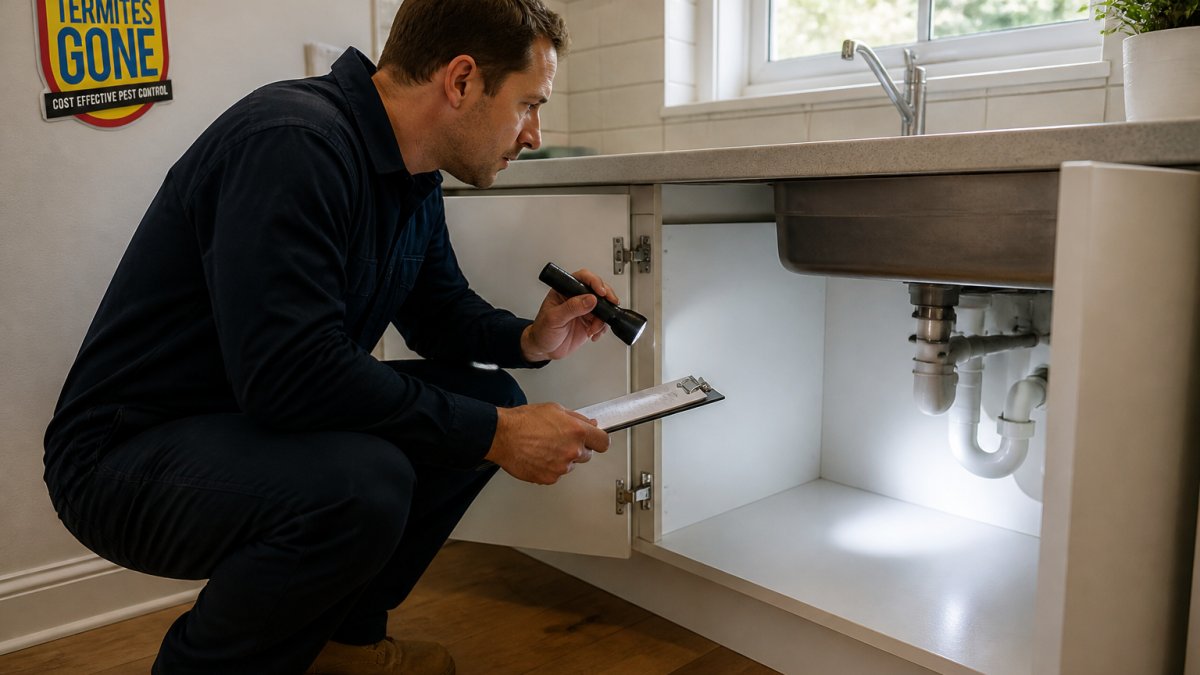
Visual inspection areas:
- Subfloor spaces and timber framing for termite damage
- Kitchen and bathroom areas for cockroach activity or droppings
- Bedrooms and mattress areas for bed bug signs
- External walls, gutters, and roof spaces for pest entry points
- Plumbing penetrations and gaps where pests can enter
- Storage areas and under-house spaces where pests nest
Documentation required:
- Photographs of any pest activity or damage
- Written report detailing findings and recommendations
- Treatment recommendations with cost estimates
- Timeline for follow-up inspections if needed
Professional inspectors use tools like moisture meters and thermal imaging to detect pest activity in hidden areas. A surface-level visual check misses termite colonies in timber, bed bugs in wall cavities, and cockroach infestations behind appliances.
For end-of-lease compliance in Deeragun and the surrounding region, most real estate agents require a signed pest inspection report from a licensed provider. This report becomes part of the bond documentation and protects both you and the incoming tenant.
Tenant Pest Control Request Template and Communication
Clear communication prevents misunderstandings and protects your legal position. When a tenant reports pests, respond in writing within 24 hours, even if it’s just to acknowledge the complaint and outline next steps. Here’s a template to guide your response:
Subject: Pest Control Request – [Property Address]
Dear [Tenant Name],
Thank you for reporting the pest issue at [property address] on [date]. We take all maintenance concerns seriously and are arranging immediate professional assessment.
A licensed pest control provider will contact you within [24-48 hours] to schedule an inspection. Please ensure the property is accessible during business hours [specify times]. The inspection is at no cost to you.
Once the inspection is complete, we’ll provide you with a treatment plan and timeline. If treatment is required, we’ll coordinate a convenient time for the service.
Please reply to confirm your availability or contact us if you have questions.
Best regards,
[Your Name / Property Manager]
Key elements of this template:
- Acknowledge the complaint immediately
- Specify a response timeline (24-48 hours)
- Explain the inspection process
- Clarify that inspection costs are your responsibility
- Request confirmation of availability
- Provide contact information for follow-up
Keep copies of all communications. If the tenant later claims you ignored their complaint, written records prove otherwise. Tenants should never feel like their concerns are dismissed.
End-of-Lease Pest Control and Bond Compliance
End-of-lease pest control is non-negotiable in Queensland rental properties. Real estate agents, property managers, and incoming tenants expect documented proof that the property has been professionally treated and inspected. Without this, you risk bond disputes and tenant claims of pre-existing infestations.
Most end-of-lease inspections include a general pest treatment (cockroaches, ants, spiders) and a termite inspection. The inspection report becomes part of the bond documentation.
Timing matters. Schedule pest control 1-2 weeks before the new tenant moves in. This allows time for treatment to take effect and the property to air out. If you wait until the day before move-in, you risk incomplete treatment or tenant objections to odours or residue.
Termites Gone Townsville provides end-of-lease pest control with detailed reports suitable for bond lodgement. Our documentation proves compliance and protects your position if disputes arise later.
Property managers and landlords managing multiple rentals in the region who need reliable, documented end-of-lease pest control to simplify turnover and protect bond claims.
What to Expect from Professional Urgent Pest Treatment
Professional pest control differs significantly from DIY approaches or discount services. When you engage a licensed provider for urgent pest control for rental properties, you’re investing in proper diagnosis, targeted treatment, and ongoing protection.
The professional process typically includes:
-
Initial assessment – Inspector identifies the pest type, infestation severity, and entry points. This diagnosis determines the treatment strategy.
-
Treatment plan – The provider recommends specific methods: barrier treatments for termites, targeted sprays for cockroaches, heat treatments for bed bugs. They explain the process and timeline.
-
Application – Licensed technicians apply treatments using approved chemicals and methods. Rental properties require pet-safe and child-safe options where applicable.
-
Detailed report – You receive written documentation of the treatment, chemicals used, safety precautions, and warranty terms. This report is essential for bond compliance and future reference.
-
Follow-up – Many providers offer follow-up inspections 2-4 weeks after treatment to confirm effectiveness and address any remaining activity.
Professional treatments come with warranties. If pests return within the warranty period, the provider typically retreats at no additional cost. This guarantee protects your investment and gives you recourse if the initial treatment fails.
Termites Gone Townsville offers warranty coverage on all general pest control work. Over 20 years, we’ve built our reputation on thorough treatment and reliable follow-up. Our detailed reports meet real estate agent requirements and provide the documentation you need for bond lodgement.
Urgent pest control for rental properties isn’t just about comfort, it’s about protecting your investment, meeting legal obligations, and maintaining positive tenant relationships. Delays cost money. Quick, professional response saves it.
If you’re managing rental properties in Deeragun or the surrounding region and need urgent pest control, Termites Gone Townsville is ready to help. We understand the time-sensitive nature of rental property maintenance and the importance of documented, professional treatment. Contact us today for immediate assessment and treatment scheduling. Our experienced team will ensure your property meets compliance requirements and remains pest-free for your tenants.
Frequently Asked Questions
Who is responsible for pest control in a rental property in Queensland?
In Queensland, landlords are responsible for maintaining rental properties in a safe, habitable condition. This includes pest control. Under the Residential Tenancies and Rooming Accommodation Act 2008, landlords must keep the property free from pests that affect its habitability. Tenants must report pest problems promptly, and landlords must arrange treatment within a reasonable timeframe.
How quickly should a landlord respond to urgent pest control requests?
Landlord pest control response time depends on the severity. For urgent pests affecting health or safety, bed bugs, cockroaches in kitchens, or active termites, landlords should arrange treatment promptly. For less urgent infestations like spiders or ants, a reasonable timeframe is acceptable. Document all requests in writing and keep records of responses. Professional pest control services can often accommodate emergency bookings, especially for termite activity or health hazards.
What should I include in a tenant pest control request to my landlord?
A tenant pest control request template should include the date, location of pests, type of pest, how long the problem has existed, photos if possible, and the impact on habitability. Write formally and keep a copy. Example: ‘I am reporting a cockroach infestation in the kitchen, first observed on [date]. This affects food preparation safety. I request prompt treatment and ask for written confirmation of the appointment.’ Send it via email or registered post to create a record for bond disputes.
Who pays for pest control when urgent treatment is needed during a rental lease?
The landlord pays for urgent pest control during the lease if the infestation is not caused by tenant neglect. If pests result from poor housekeeping or damage caused by the tenant, the landlord may charge the cost against the bond. For end-of-lease pest control before handover, check your lease agreement, many require the tenant to arrange and pay for final treatment. Always clarify responsibility before paying to avoid bond disputes.